
They seem charming at first, taking interest in everything about you. They’re thoughtful and considerate and do all the right things to draw you in. They are the perfect partner or friend. You talk, laugh and share everything about your life with them.
Then you start to notice things don’t quite add up. Conflict becomes the norm. You’re walking on egg shells, afraid to speak openly. You second guess yourself. You censor your words and feelings to avoid another argument. You start waking up at 3 a.m. with panic attacks, no longer knowing what to believe or trust.
The moment you start to wonder if you deserve better,
OneMindfullife.com
You do.
If any of this sounds familiar, the chances are you might be in a toxic relationship.
All relationships have their ups and downs. Some people grow apart and go their separate ways. Some weather the storm and come out stronger. Rather than building you up, toxic relationships undermine your confidence and sense of worth, leaving you questioning reality and doubting yourself.
Signs You’re in a Toxic Relationship
Secrecy
How much do you really know about the person you’re with? Relationships grow and deepen as stories and experiences are shared through open and honest communication. Healthy relationships balance the need for privacy and the right to information.
When one party is secretive, they present only the version of themselves they want you to see. Anything about themselves or their activities that could result in rejection, refusal or conflict is held back. While it’s possible the person may not be open for other reasons, such as past betrayal, if they hold back information that affects you personally or your ability to make an informed decision, it’s a good sign you’re not considered an equal in the relationship.
If the person is giving vague or evasive answers to normal questions about their life, restricting what you see on social media, and telling you “it’s not your business”, it’s time to rethink the relationship.
The Silent Treatment
It happens on occassion that conflict in a relationship will lead to the silent treatment as one party takes time to cool down and evaluate the situation before working at repair. In a toxic relationsthip, the silent treatment is designed to punish the offending party. You many have no idea why the other person is suddenly not talking to you and they are unwilling to discuss it, leaving you to guess what your transgression may be and scrambling to find a solution to a problem that hasn’t been verbalized. When used as punishment, the silent treatment is a form of coercive control that destabilizes the relationship and leaves you walking on egg shells.
Lying
We’ve all done it. A friend asks if you like their haircut and you tell the little white lie to avoid hurting their feelings. While not the best tack to use, the fib comes from a place of love and isn’t a pattern in the relationship.
Lying, however, is a common tactic used in a toxic relationship to avoid taking responsibility, to maintain control of the situation, and to manipulate the other person’s perception and behaviour. The lie is often used to manipulate the other into a desired outcome. If challenged, the toxic person will often respond with anger, deflect questions, deny wrong-doing and then accuse the other of what they themselves have done.
Gaslighting
Gaslighting is a toxic form of manipulation designed to make you question your beliefs and intuition. It’s often used in conjunction with lying to destabilize your perception of reality and maintain control. When confronted with a lie or other manipulative behaviour, a toxic person will often use words like “crazy”, “overreacting” or “irrational” to describe you or what you’re saying. You may be told it’s “all in your head”. They’ll deny having done anything and try to make you second guess your feelings or reaction to a particular situation.
Gossip and Backstabbing
At some point in most relationships, there will be conflict as the parties discover their differences and work to sort them out. In those instances, you may choose to talk to a trusted friend who can help you see clearly and come up with a solution. At the heart of that is a desire to find a common ground that strengthens the relationship.
In a toxic relationship, the offended party will vent to anyone and everyone about every slight and disagreement, making themselves out to be the victim. In doing so, they show little discretion or consideration for the privacy of or impact on the other party. This is often a preemptive strike to discredit the other person if the relationship ends and to gain empathy and loyalty among common friends and within social circles. A form of verbal poison, gossiping and backstabbing serves to isolate the victim from their peers and avenues of support.
If people you once trusted suddenly pull away and treat you cooly or you’re being asked leading questions about your relationship when you’ve never discussed it, your friend or partner is likely talking about you behind your back.
At the root of a toxic relationship is a lack of respect for you as a person, with your own needs, thoughts and desires. The toxic partner or friend manipulates the relationship to serve their needs alone and shows no empathy for you or the impact on your life. This may be due to past trauma manifesting as a need for control, or it may due to a personality disorder like narcissim or sociopathy. Regardless the reason, finding yourself in a toxic relationship can lead to mental and physical health issues, including stress, depression, and anxiety. Long-term exposure can result in post traumatic stress disorder that may require the assistance of a therapist to overcome.
Set Yourself Free
In a toxic relationship, it’s important to understand that you cannot “fix” the other person. Until they themselves choose to change their behaviour, you will suffer as long as you stay in the relationship. If you think you’re in a toxic relationship, there are steps you can take to protect yourself.
Trust Your Gut
Evolution has honed our instincts to recognize threat, yet too often we discount that discomfort that lies in the pit of our stomach or try to rationalize it away. Because we care for the other person, we want to give the benefit of the doubt. Don’t. If you have any sense that something isn’t right in your relationship or you begin to question what you know, trust that instinct.
Set Boundaries
No matter what point your relationship is at, it’s never too late to set boundaries. Your mental and physical health come first. Decide that you are worthy of a healthy relationship and set the boundaries for what you will and will not accept in your relationship. If those boundaries are repeatedly ignored, it’s time to take the next step.
Make a Clean Break
If you’ve made initial efforts to discuss the situation with your partner or friend and experienced gaslighting, it’s time to make a clean break. Remove them from your social media, delete their number, and take any means necessary to avoid contact with them. If contact is unavoidable, as in a work situation, keep any conversation short and do not discuss personal information that could be used against you.
You may have to let go of other personal relationships or avoid shared social activities. The loss can be difficult but is important initially to allow yourself to time to heal and regain your emotional strength.
If mutual friends contact you to talk about what happened, you aren’t required to engage. A true friend with respect your desire for privacy. If they push, they may be trying to get information for your former partner or friend.
Find Support
Toxic relationships can shatter your confidence and make you question everything you thought you knew. Navigating through the emotions, second-guessing and self-doubt can be difficult to manage alone. Find a trusted friend, coach or therapist to help you understand what happened, regain your balance and set a more positive course.
Everyone is deserving of a healthy relationship that is based on respect, honesty, trust and consideration. The moment you refuse to accept anything less is the first step to finding the relationship you deserve.
Sometimes walking away has nothing to do with weakness and everything to do with strength. We walk away not because we want others to realize our worth and value,
Unknown
but because we finally realize our own.
Life Lessons From Camino de Santiago
Lesson # 10 – Let it Be
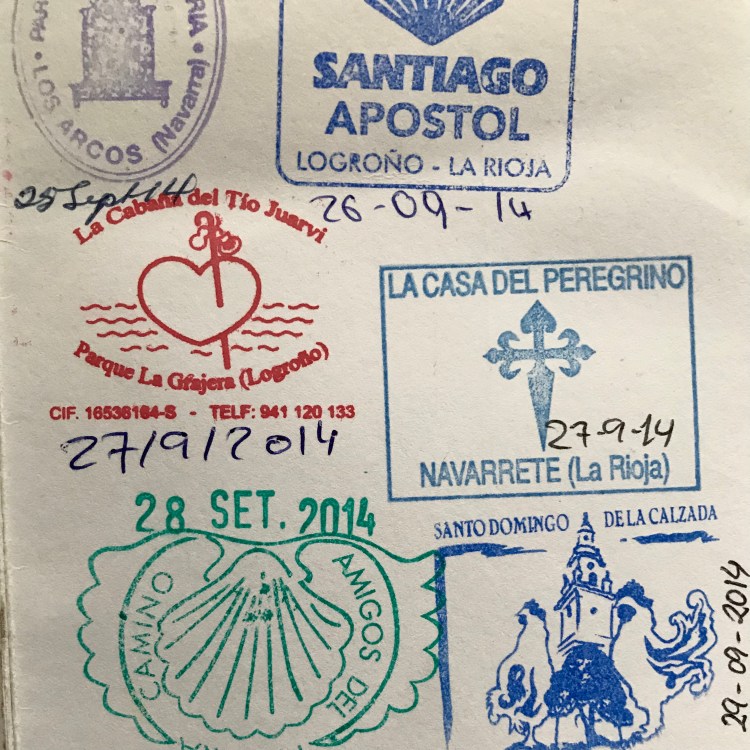
For six weeks, I walked Camino de Santiago, often with friends, and just as often alone. In those solitary moments when the pace was easy and my mind was quiet, I would often notice the refrain of an old song playing like a meditation in the back of my mind. “Let it be, let it be, let it be, let it be. Whispered words of wisdom, let it be.”
When things go wrong or we’re facing challenges in our lives, our first instinct is to try “fix” the problem or person or thing. We want to find a solution. We want to make it as if it hadn’t happened. To go back to the way it was. Sometimes, trying to “fix” the problem only makes it worse.
What does it mean to “let it be”? It’s a form of mindfulness that means accepting the situation for what it is instead of trying to make it what you want it to be. It’s recognizing that there are some things you cannot control. It’s having faith that we only need to be who we are and nothing more.
It’s said that time heals all wounds. That’s only true if we don’t pick at them. Had an argument with a friend? Let it be. Been the topic of gossip? Let it be. Had a couple of drinks and thinking of calling the ex? For god’s sake! Let it be! (and call a friend who will talk you down instead!). Sometimes the best option is to do nothing, to let it be what it is, and move beyond the situation.
We can’t change the past and we have no idea what the future holds in store for us. The only thing we can really do is live our lives according to our own values and let everything else be.
Books We Love
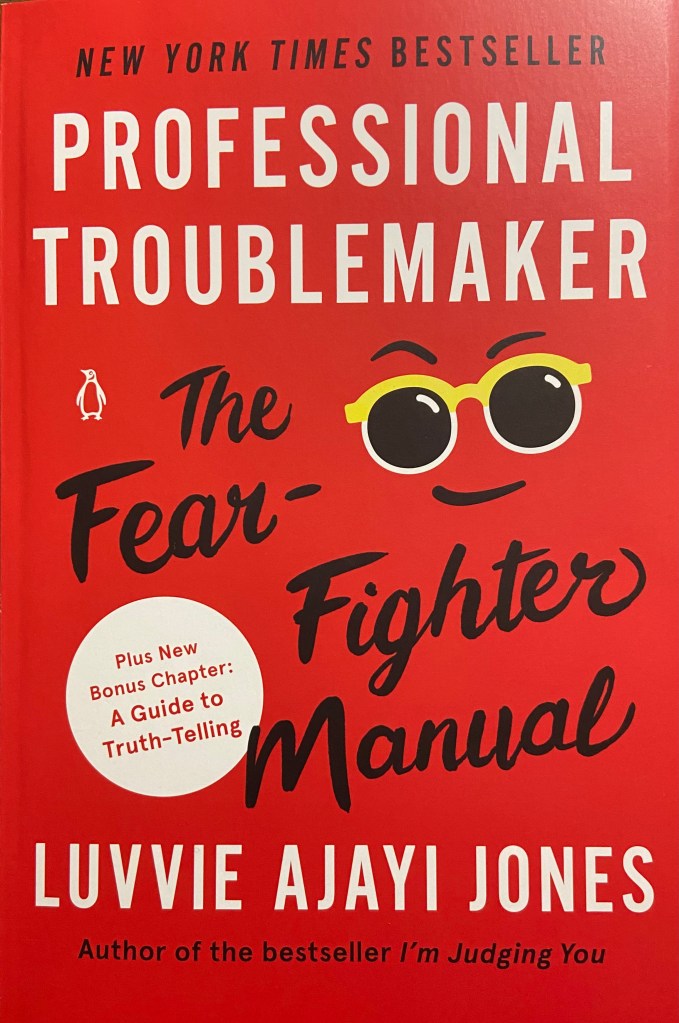
Professional Trouble-Maker: The Fear Figher Manual by Luvvie Ajayi Jones
Any time you’re forced to make change, the first thing that greets you is fear. We’re all afraid – afraid of taking a risk, afraid of speaking up, afraid of wanting more. It’s part of our human condition. What we do with that fear is what matters.
Like the best friend who tells you what you need to hear, award-winning author, speaker and writer,, Luvvie Ajayi Jones will set you straight on how to move beyond the fear to living a life of abundance.
With humour, honesty and heart, combined with the wisdom of Luvvie’s own personal inspiration – her grandmother – The Professional Troublemaker sends you on the bold path to BE who you are, SAY what you want and DO what is best for you.
If you’re ready to take that next step beyond fear to discovering your own strength, Luvvie is the inspiration and guide to set you straight!
Thank you for visiting! If you’ve enjoyed what you read, please like, share or join the conversation in the comments. Or contact me directly here. I’d love to get your feedback!
 JEANNE M WALSH COACHING