
Annette* came to me feeling stressed, anxious and was having difficulty sleeping. There had been downsizing at her job and she was taking on additional work, staying over-time and bringing projects home on the weekends to get caught up.
When I asked if she had spoken to her supervisor to see if the workload could be reduced to a more manageable level, her response was telling. “Everyone’s in the same boat. I don’t want to look like I’m not a team player.”
Always the first to offer help, it became clear as we talked that Annette had never considered setting boundaries with her family, her friends, or her employer. Years of always saying “yes” had begun to affect both her physical and mental health.
How often do we find ourselves saying “yes” when we really want to say “no”, only to end up exhausted, resentful, and stressed? How often do we go along to avoid making waves, offending someone, or causing an argument? How often do we put the needs of others before our own? How often do we feel frustrated, angry, or annoyed with another person for reasons we can’t express?
What are boundaries?
Boundaries are our personal means of navigating our relationship according to our values and needs. Whether we’ve communicated them verbally or through our actions, they exist in every area of our lives and often differ depending on the particular relationship or setting. You’re less likely to offer up personal information in a work setting than you would with a close friend. You may be more vocal about your politics in private than you would on social media. You’ll appreciate physical contact from a parter, but back away from same with a stranger.
By setting boundaries, we’re making clear what we will and will not accept in our relationships. If our boundaries are too rigid, we risk isolating ourselves from connection with others. If they’re too flexible, we open ourselves to disrespect and, in extreme cases, abuse.
Healthy boundaries allow us to:
- communicate our self-esteem and self-respect through our words and actions:
- value our own voice and opinions;
- have and maintain personal relationships separate from our partner;
- share personal information in a healthy way – neither too much nor too little, depending on the circumstances;
- protect our physical and emotional space;
- retain our autonomy and authenticity: and
- respect our personal needs and wants;
- respect the boundaries of others.
It can be difficult to set and stay true to our boundaries. We want to be liked, accepted and included in our social circles. When we say “no”, we risk rejection or conflict with those we care about. It takes courage to put our own needs first, even when it means disappointing someone we love. It is imperitive, however, that we do for our mental and physical well-being.
How to Set Personal Boundaries
Define Your Limits
To define your limits, you have to understand what your values and your pesonnal needs are. Do you value honest and integrity? Do you value time with your family? Do you value personal time alone to unwind and reflect? Do you value having your own life separate from your partner? Ultimately, you come first. If you’re not taking care of your own needs, you will reach a point where you can’t take care of anyone else’s.
Start Early
When you set your boundaries early in a relationship, you set the tone for creating a relationship based on mutual respect and consideration. As your relationship grows and trust is built, you may choose to adjust your boundaries to allow a closer connection to develop. If your boundaries are not respected, you won’t have spent a lot of time invested in a relationship that is unhealthy.
Be Clear
Often it’s necessary to communicate your boundaries, particularly if they’ve been overstepped, either intentionally or unintentionally. Communicating boundaries doesn’t need to be complicated or extensive. State your expectations simply, clearly and respectfully. For example, if a friend has been talking behind your back, you may tell your friend that you expect your privacy to be respected and private matters not be discussed with others.
Remember that “No” is a complete sentence. You don’t need to explain or justify, nor are you responsible for another person’s reaction to your boundaries.
Daring to set boundaries is about having the courage to love ourselves
Brené Brown
even when we risk disappointing others.
Be Consistent
There’s an old saying that comes to mind – “give an inch, take a mile”. When we allow others to overstep out boundaries, we are teaching them that our needs are secondary to their desires. If we betray our own boundaries, we create an environment where others will do the same. Repeated violations can create stress in our lives that lead to conflict, discontent, illness and disease. In extreme cases, it can also can lead to mental, emotional, or physical abuse.
Staying true to our boundaries can be difficult, but is necessary to ensure we maintain a healthy relationship with the person who matters most – ourselves.
Beware the Red Flags
There are some things that should never be tolerated in any relationship. Lies, manipulation, gaslighting or any type of controlling behaviour, as well as a repeated disregard for your boundaries, are an indication of a lack of respect for you as a person. If you sense that something in your relationship isn’t right, trust that instinct. If you’ve discussed the matter with the other person and nothing changes, the only response is to leave, cut off communication, and move away from the relationship.
You have every right to your privacy, your dignity and your self-respect. Setting boundaries can take time and practice. Listen to your own needs, keep it simple, keep it clear, and keep practicing.
It took some months for Annette to establish some simple boundaries with her employer, her friends, and her family. The last we spoke, her anxiety had disappeared and she was enjoying a much healthier and more balanced life.
* story used with approval and named changed for privacy purposes.
If you would like to know more about setting boundaries or want assistance strengthening your own, CONTACT ME to arrange a free discovery session.
Each day is a different one, each day brings a miracle of its own.
Paolo Coelho
It’s just a matter of paying attention.
Life Lessons from Camino de Santiago
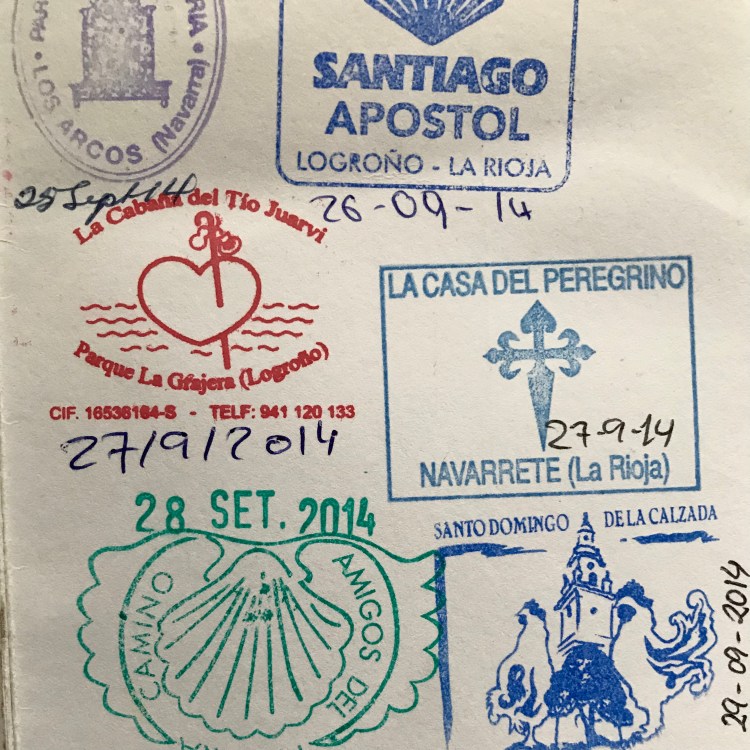
Lesson # 8 – Expect Miracles
Camino was traditionally a Christian pilgrimage to the Cathedral in Santiago de Compostella where it’s said the bones of St. James are buried. St. James’s story of his time in Spain and the return of his bones after his death is filled with miraculous events. So it’s no suprise that people come to Camino in the hope of a miracle. Defined, a miracle is “a surprising and welcome event that is not explicable by natural or scientific laws and is therefore considered to be the work of a divine agency.”
Miracles happen on Camino, just not the turning water into wine kind.
They are simple and easily missed if you’re not paying attention. It’s running into someone you hadn’t seen for a few days at a time when you’re feeling low and needing a friend. It’s the motherly hug from a stranger when your heart is breaking. It’s discovering the strength to go on when the road seems endless. It’s walking into an albergue and finding your camino brothers you’d said goodbye to a week earlier when you had to stop due to injury. It’s finding the words you need to hear in someone else’s story. It’s discovering family in a group of strangers.
You’ve probably experienced little miracles in your own life. Catching the green wave when you’re late for work. Thinking of an old friend only to have them call. Narrowly missing that ladder that flies off the truck in front of you on the highway. Getting that unexpected cheque just as a bill comes due.
Miracles happen every day. Keep your eyes open, remain in the moment, and pratice gratitude. Expect miracles and you’ll discover them in the simplest moments.
There is a crack in everything. That’s how the light gets in.
Leonard cohen
Books We Love

The Gifts of Imperfection by Brené Brown
Every day, we’re innundated by media telling us we need to be fitter, richer, have a bigger house, a nicer car, more friends, and sunny holidays in the tropics in order to be happy. The message is clear. We’re just not enough as we are.
But what if you were enough? Right now? What if we stopped trying to be perfect and accepted ourselves for who we are in all our imperfect humanity?
A quick and easy read that speaks truth to our fear of vulnerability and desire for approval, Brené Brown’s The Gifts of Imperfection reminds us to let go of anxiety, self-doubt and what others think in order to be our authentic selves.
Brown uses her own experience to wholehearted living to offer practical suggestions for taking your own leap. Get deliberate, get inspired and get going with The Gifts of Imperfection!
Thank you for visiting! If you’ve enjoyed what you read, please like, share or join the conversation in the comments. Or contact me directly here. I’d love to get your feedback!
 JEANNE M WALSH COACHING