Be proud of how you’ve been handling these past months. These silent battles you fought, the moments you had to humble yourself, wiped your own tears and pat yourself on the back. Celebrate your strength.
Unknown
Bell Let’s Talk Day is January 26.
In honour of this year’s theme – Supporting Ourselves and Each Other – I am offering FREE half hour coaching sessions all day. Let’s end the stigma around mental health and begin the converation.
Sign up here and Let’s Talk!

Reflections on a Year of Uncertainty and Living in the Moment
The end of any given year is a time to reflect on the past and plan for the future. That’s been particularly challenging over the last two years due to covid and the restrictions that have affected all our lives.
The optimism at the beginning of 2021 that a vaccine would herald the return to a sense of normalcy was short-lived as new variants and increased cases led to the return of restrictions on our movements and activities. Plans and holidays were cancelled, celebrations postponed. Some were forced to stand by helplessly while loved ones passed away, alone in a hospital room, with no visitors to hold their hand or ease their fears. Others had to make the difficult decision to close small businesses and let go of staff.
Government mandated vaccinations, implemented universally with the risk of job loss for non-compliance, further polarized already divided communities, friends, and families as people made the personal choice to vaccinate or not.
Meanwhile, health care workers continue to work around the clock to address the worst cases while bearing the brunt of the anger and frustration stemming from what seems to be a never-ending crisis.
That our mental health has suffered over the last two years isn’t a surprise. As humans, we are social animals. Contact and connection with family and friends is necessary to our well-being. Physical touch is a balm to our emotional wounds. In trying to do the best for the well-being of others, we ourselves have suffered from a lack of social interaction. In addition to general feelings of loneliness and isolation, cases of major depressive disorders and axiety disorders have increased approximately 25% globally.
We begin a New Year with the same uncertainty as the last. Even as restrictions ease, there remains hesitation to return to our formal normal lives. So where do we go from here?
Into the moment.
We have a tendency to live everywhere but the moment. Our fast-paced lives constantly draw our attention away from the immediate. We’re rarely content with where we’re at, instead planning for the next relationship, the next job, the next trip, the next success. Or we’re living in the past, rehashing old hurts and grudges, reminiscing about good times long ago, replaying past converstations or missteps in our minds. When we live in the past or the future, we’re not fully present and can miss the beauty of the present.
All we really have is the here and now. By embracing it and being mindful, we can surmount the uncertainty of our covid world and discover the joy of being present in the moment.
Developing mindfulness takes practice and the more you do it, the easier it becomes. These simple practices can help bring you back into the moment when your mind starts to wander into the past or future.
Breathe
It seems like a simple thing, something we do without any thought. What we’re thinking at any given moment can affect our breathing patterns. When we begin to feel anxious, our breathing quickens and shallows and we become tense, creating more anxiety. When you begin to feel the tension, stop, take a moment, and breathe.
Sit with your feet flat on the floor with your eyes closed or focussed on a single spot. Tell your body to relax. Take a deep breathe so that your belly expands. Focus on your breath as the cool air flows through your nostrils and into your chest; pay attention to the warm air as it flows out. Then focus on your body as you breathe. Feel your feet on the floor, your thighs against the seat, the way your shoulders drop as you breathe in and out. Bringing yourself back to the body through focused breathing anchors you in the moment and helps relieve tension.
Look Up
What happens to your body when you’re deep in thought? Do you drop your head? Hunch your shoulders? Lower your eyes? Do you “see” what’s around you or does your focus become narrow? When you find yourself ruminating on a either the past or daydreaming about the future, stop. Lift your head, pull your shoulders back, and look around you. Focus on three things you can see, then three things you can hear, and three things you can smell. Once you start living in the moment, you become more aware of your surroundings and your connection to it in the moment.
Accept Where You Are
We can’t change the past as much as we’d like to be able to sometimes. The future is an intention we’d like to see materialize but we’ve all seen how outside factors can change our plans in a moment. While we can plan for and work towards the future, we can’t predict exactly how it will turn out. By accepting where we are at the moment, we’re better able to focus on what we can do right now to create the life that we want to live. We’re not tied to a particular outcome and are better able to adapt to changing conditions. Ultimately, we have the choice in how we want to live in this moment, how we want to spend it and how we want to feel.
Be Grateful
No matter where you are in your life at the moment, there is always something to be thankful for, even if it’s just that you woke up that day. When we practice gratitude, we focus on what we have in this moment, not what we’ve lost or what we want. Practicing gratitude helps us to identify what we value most and we begin to really see all that we often take for granted for the gift it is. In doing so, are better able to appreciate and care for it.
If you’re struggling with loss, you may find this practice difficult. Be thankful anyways. Thankful for that person or situation. Thankful for the lessons you learned. Thankful for how the relationship or situation changed you and helped you grow. Thankful for those who are there, helping you through.
We don’t know what the world has in store for us tomorrow, next week or next month. All we really have is today. How do you want to live it?
“Too often we underestimate the power of a touch, a smile, a kind word, a listening ear,
Leo Buscaglia
an honest compliment, or the smallest act of caring, all of which have the potential
to turn a life around.”
Life Lessons from Camino de Santiago
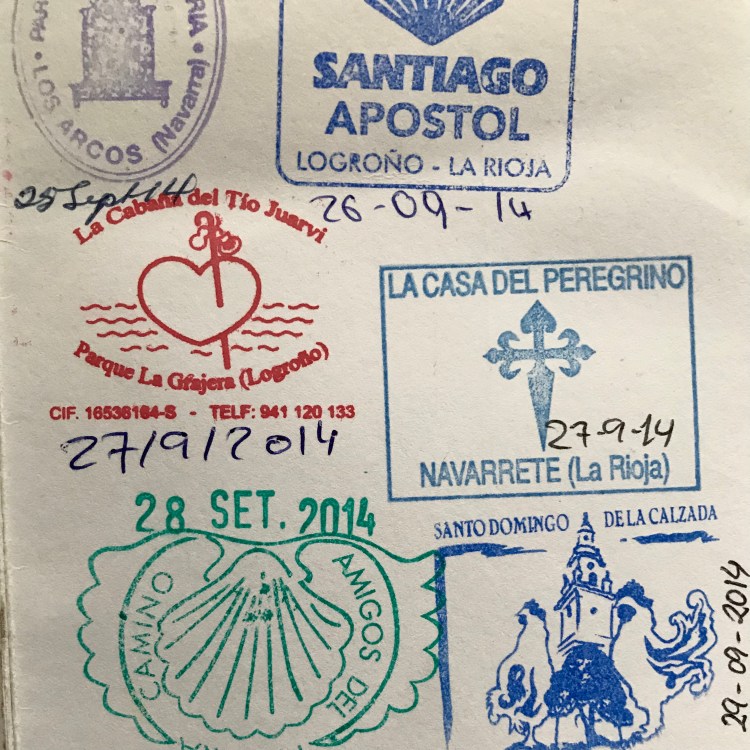
Lesson # 7 – Practice Kindness
The first question asked whenever meeting someone on Camino is “where are you from”? Every year more than a quarter of a million pilgrims begin the Camino de Santiago, starting their journey from large cities and small towns all over the world.
The second question is more intimate. “Why are you here”?
Camino is the great equalizer. It doesn’t matter what you do or how much you make or what kind of home you live in. For our time on the road, we are all pilgrims, sharing the same food and lodging and path.
What matters are the stories and each pilgrim has their own. One friend was there to complete what his sister couldn’t after losing a battle with cancer. Her dream had been to walk Camino; he did it for her. Another man I met was there to say good-bye to the love of his life who had passed years earlier so that he could begin his future with a new love. A couple I met were there to try to renew their relationship that had stagnated over the years. I was there to heal.
We shared our stories as we walked. Shared them over meals. Shared them when the rain forced us under shelter. Shared them with strangers who soon became friends. We shared stories of love and loss, of pain and suffering, regret and remorse, hope and faith. We shared our stories and, in doing so, found grace and acceptance.
The kindness discovered on the road often came unasked and unexpected. A basket of fresh pears left out for anyone who wanted to take one. A steady hand on the shoulder when the tears began to flow during a pilgrim blessing. A motherly hug from a stranger who saw you were having a bad day. An invitation to sit and share a meal when you’re on your own. A kind word or encouraging smile when the road seems long and hard. Little acts that made all the difference.
We all have our stories. We all have battles we’re facing. We all have bad days. None of us know what someone else might be struggling with behind their smile. In all things, practice kindness. You never know the difference it might make in another person’s life.
“Sometimes it takes only one act of kindness and caring to change a person’s life.”
JACKIE CHAN
Coming in April
DEVELOPING PERSONAL RESILIENCY
What does it mean to be “resilient”? We’ve heard the phrases “weathering the storm” and “bouncing back after adversity” but do we really understand what that means in practical terms and how we can develop it in our own lives? In this on-line course, we’ll look at the risk factors that affect a person’s resilience, identify the factors that encourage personal resiliency, and discover the tools to develop resiliency in your own life.
Stay posted for further information.
Thank you for visiting! If you’ve enjoyed what you read,
please like, share or join the conversation in the comments.
I’d love to get your feedback!
 JEANNE M WALSH COACHING